
Every minute matters during a stroke. When warning signs are overlooked and treatment is delayed, the consequences can extend far beyond the initial medical emergency.
An estimated 1.9 million brain cells are lost every minute during a typical untreated large-vessel ischemic stroke. In just one hour, that loss can reach approximately 120 million neurons and 830 billion connections between brain cells. Researchers have estimated that the resulting damage is comparable to 3.6 years of normal brain aging.
These findings, published in the American Heart Association’s medical journal Stroke, help explain one of the most important principles in emergency medicine: Time is brain. Although the rate of injury varies depending on the type and severity of the stroke, the underlying concern remains the same. When blood flow to part of the brain is interrupted, the opportunity to prevent permanent damage may diminish with every passing minute.
Advances in stroke treatment have made it possible to restore blood flow, limit neurological damage, and improve recovery for certain patients. However, those treatments depend on the stroke being recognized promptly. When symptoms are mistaken for a less serious condition, patients may lose access to interventions that could have changed their outcome.
Recognizing a stroke is not always straightforward. Although many people associate strokes with facial drooping, weakness on one side of the body, or difficulty speaking, some patients experience less recognizable symptoms, including dizziness, nausea, confusion, vision changes, or difficulty walking. These symptoms may resemble vertigo, migraines, or other relatively common medical conditions.
Research also suggests that women may experience certain additional stroke symptoms more frequently than men, creating further challenges when a patient’s presentation does not match the traditional warning signs.
For patients whose strokes are overlooked in emergency departments, the consequences can be life-altering. A delayed diagnosis may mean the difference between recovering with minimal disability and facing permanent neurological injuries that require years of rehabilitation or lifelong assistance.
Understanding how strokes are missed, why symptoms sometimes differ between men and women, and when a delayed diagnosis may constitute medical malpractice is essential for patients and families navigating these devastating circumstances.
Why Some Strokes Are So Difficult to Recognize
Most people recognize the classic signs of a stroke: facial drooping, weakness on one side of the body, and difficulty speaking. These symptoms are important, but they do not represent every possible presentation.
A stroke occurs when blood flow to part of the brain is interrupted by a blockage, known as an ischemic stroke, or when a blood vessel ruptures, causing a hemorrhagic stroke. The symptoms depend on which part of the brain is affected.
Strokes involving the posterior circulation—the blood vessels supplying the brainstem, cerebellum, and portions of the back of the brain—can produce symptoms that are particularly difficult to recognize. Patients may experience sudden dizziness, double vision, nausea, vomiting, or severe difficulty maintaining balance. Some cannot stand or walk without assistance, even though they can speak clearly and move both arms.
These symptoms overlap with conditions such as vertigo, inner-ear disorders, and migraines, creating a significant diagnostic challenge. Dizziness is a common emergency department complaint, and most cases are not caused by a stroke. Nevertheless, distinguishing a relatively harmless vestibular condition from a potentially life-threatening neurological emergency requires careful clinical judgment.
A federal Agency for Healthcare Research and Quality review of diagnostic errors in emergency departments identified stroke among the leading conditions associated with serious harm from missed diagnoses. Research has also found that strokes presenting with dizziness or vertigo are particularly vulnerable to diagnostic error.
The timing and pattern of symptoms can provide important clues. A patient who experiences brief spinning sensations when changing head position may require a different evaluation from someone who suddenly develops continuous dizziness, severe imbalance, and an inability to walk normally. A thorough assessment of neurological findings, medical history, and accompanying symptoms can help physicians determine whether a stroke should be suspected.
In some circumstances, specialized bedside examinations of eye movements may help distinguish a neurological problem from an inner-ear disorder. However, these techniques require appropriate training and are not suitable for every patient. The broader concern is that an unusual presentation should not automatically exclude a serious diagnosis, particularly when symptoms develop suddenly or are accompanied by significant neurological changes.
Stroke Symptoms in Women and Men: What the Research Reveals
Stroke affects both men and women, and the most recognizable warning signs are largely the same. However, research suggests important differences in risk factors, symptom patterns, and recovery that may influence how strokes are recognized and treated.
In a 2024 American Heart Association article, 7 Things to Know About How Stroke Is Different for Women, medical experts highlighted several findings that challenge common assumptions about who experiences strokes and how they present.
One particularly important difference involves blood pressure. High blood pressure is a major risk factor for stroke in both sexes, but some research suggests that women may face greater stroke risk than men at comparable blood pressure levels. The AHA highlighted research indicating that women with systolic blood pressure readings between 120 and 129 had a stroke risk comparable to men with readings between 140 and 149. Although these findings do not establish different treatment thresholds for women, they underscore the importance of understanding how cardiovascular risk may vary between the sexes.
Women also experience certain stroke risk factors that men do not. Pregnancy complications, including preeclampsia and gestational diabetes, may increase stroke risk years after childbirth. Early menopause has also been associated with elevated risk. These factors can be particularly relevant when physicians evaluate younger women who may not fit the traditional profile of a stroke patient.
Although strokes become more common with age, they also occur in younger adults. Research highlighted by the AHA suggests that women ages 25 to 44 may face stroke risks comparable to or greater than men in the same age group. This challenges the assumption that strokes primarily affect older adults with established cardiovascular disease.
Do Women Experience Different Stroke Symptoms?
The classic warning signs of stroke—including facial drooping, arm weakness, speech difficulties, sudden vision changes, and loss of balance—are important for everyone. However, women are more likely to report certain additional symptoms, including nausea, confusion, and loss of consciousness.
These differences can complicate diagnosis because such symptoms are associated with numerous other medical conditions. A woman who arrives at an emergency department with sudden nausea, dizziness, and confusion might initially appear to have a migraine, dehydration, a medication reaction, or another relatively common condition. When these symptoms occur alongside sudden neurological changes, however, stroke may warrant consideration.
Women are also more likely to experience migraines, particularly migraines with aura, which are associated with an increased risk of ischemic stroke. Because migraine symptoms can overlap with neurological warning signs, distinguishing between these conditions may require careful assessment.
Importantly, these symptoms are not exclusive to women. Men can experience nausea, confusion, or dizziness during a stroke, just as women frequently develop the traditional warning signs. The distinction is not that men and women experience entirely different strokes, but that differences in risk factors and symptom patterns may influence how quickly a stroke is recognized.
The AHA also identifies disparities in stroke risk among racial and ethnic groups. For example, Black women experience a higher incidence of stroke than non-Hispanic white women, reflecting a combination of medical risks, differences in healthcare access, and broader social factors.
Differences can persist after the stroke itself. Women tend to experience their first stroke at an older age than men, and studies have found that women, on average, experience poorer functional recovery and lower quality of life following stroke. Age, existing medical conditions, and other factors contribute to these outcomes.
Researchers continue to investigate how biological differences, hormones, healthcare access, and other factors influence stroke risk and recovery. Women have historically been underrepresented in some stroke research, leaving important questions unanswered.
For patients, these findings reinforce the importance of recognizing that strokes can affect individuals of all ages, including younger women without obvious cardiovascular disease. For healthcare professionals, they emphasize the importance of evaluating the complete clinical picture rather than relying on assumptions about what a typical stroke patient should look like.
A Normal CT Scan Does Not Always Rule Out a Stroke
Medical imaging plays a critical role in evaluating patients with suspected strokes. However, the limitations of certain imaging techniques can create challenges, particularly during the earliest stages of an ischemic stroke.
A CT scan is an essential diagnostic tool because it can rapidly identify bleeding in the brain. Nevertheless, an early ischemic stroke may not be visible on an initial CT scan, especially when the stroke is small or involves the posterior circulation.
MRI can identify some ischemic strokes that are not apparent on CT, although even MRI may occasionally miss a stroke in its earliest stages. Additional imaging of the blood vessels, such as CT angiography, may be important when physicians suspect a blockage involving a major artery.
These limitations do not mean that every patient presenting with dizziness requires an MRI or advanced imaging. Nor does a negative initial scan establish that a physician acted negligently. The central question is whether the medical team appropriately considered the patient’s symptoms, examination findings, and overall clinical condition when determining what additional evaluation was necessary.
For example, a patient who suddenly cannot stand or walk normally because of severe imbalance may require further neurological assessment even when an initial CT scan does not reveal an obvious abnormality. A normal imaging result is one piece of information and should not automatically outweigh significant neurological warning signs.
Evaluating the appropriateness of care therefore involves more than determining whether a diagnostic test was performed. It requires consideration of whether the appropriate examination and testing were conducted, whether the findings were interpreted correctly, and whether concerning symptoms received adequate attention.
When Every Minute Matters: Advances in Stroke Treatment
In 2026, the American Heart Association and American Stroke Association released updated guidelines for the early management of acute ischemic stroke. These recommendations reflect significant advances in treatments designed to restore blood flow to the brain and improve outcomes for eligible patients.
Clot-dissolving medications, including alteplase and tenecteplase, may be administered within the standard 4.5-hour treatment window for eligible patients. Certain individuals may qualify for treatment beyond that period when specialized imaging identifies brain tissue that may still be saved.
Another treatment, mechanical thrombectomy, allows specialists to remove a blood clot using a device advanced through the blood vessels. For selected patients with large-vessel blockages, this procedure may be beneficial as long as 24 hours after symptoms begin. The 2026 guidelines also strengthen recommendations for treating certain blockages of the basilar artery, which supplies critical structures in the brainstem.
These advances have expanded treatment possibilities for some patients who might otherwise face severe disability or death. However, eligibility depends on multiple factors, including the type and location of the stroke, the patient’s medical condition, imaging findings, and the time elapsed since symptoms began. Not every patient qualifies for these interventions, and even prompt treatment cannot guarantee recovery.
Nevertheless, the relationship between timely diagnosis and treatment is unmistakable. When a stroke goes unrecognized, appropriate treatment may also be delayed or never initiated. An intervention that could have been available during the first emergency department visit may no longer be an option hours later, potentially allowing additional neurological injury to occur.
The Devastating Consequences of a Delayed Stroke Diagnosis
The impact of a stroke is not always measured by whether a patient survives. For many survivors, the greatest challenges begin after the immediate medical emergency has ended, when permanent neurological injuries affect their ability to work, communicate, move independently, or participate in everyday activities.
Depending on which areas of the brain are damaged, patients may experience paralysis, impaired speech, memory loss, difficulty swallowing, vision problems, or permanent loss of coordination. Some require months or years of rehabilitation, while others never regain the ability to drive, work, or live independently. In the most severe cases, patients require assistance with nearly every aspect of daily life.
The consequences can extend across decades, particularly when a stroke occurs in a younger adult. A documented case in Georgia illustrates how devastating a delayed diagnosis can become.
In October 2015, 32-year-old Jonathan Buckelew suffered a brainstem stroke that went undiagnosed until the following day after he was transported to North Fulton Hospital. By the time the stroke was recognized, the opportunity for mechanical thrombectomy had passed. Buckelew developed locked-in syndrome, a rare neurological condition in which a person remains conscious and aware but is almost completely paralyzed and unable to speak or move independently. At just 32, he faced the prospect of spending much of his remaining life requiring extensive medical care.
In 2022, a Georgia jury awarded $75 million in damages after finding an emergency physician and radiologist liable. The Georgia Court of Appeals upheld the verdict in March 2025, and the Georgia Supreme Court declined further review that June. The Georgia Court of Appeals decision discusses expert testimony that timely treatment more likely than not would have allowed Buckelew to remain essentially independent. A 2025 Atlanta News First investigation documented how his family continues to provide extensive care nearly a decade after the stroke.
His case illustrates how a delayed diagnosis can permanently alter not only a patient’s future but also the lives of family members who become caregivers.
For patients with severe neurological injuries, ongoing care may include regular appointments with neurologists and rehabilitation specialists, physical and occupational therapy, speech therapy, specialized medical equipment, and modifications to the home. Some require feeding assistance, assistance with breathing, or around-the-clock nursing care. Others need help with basic activities such as bathing, dressing, and eating.
The financial consequences can be substantial. A person who previously supported a family may lose the ability to earn a living, while a spouse or parent may reduce working hours or leave employment to provide care. For younger patients, the lifetime cost of medical care and lost earning capacity can be particularly significant because those needs may continue for decades.
The emotional consequences can be equally profound. Stroke survivors may experience depression, frustration, isolation, or grief over the independence and opportunities they have lost. Families must often adjust to a dramatically different future while managing ongoing medical decisions, financial pressures, and caregiving responsibilities.
Although both women and men can experience severe disability after a stroke, research highlighted by the AHA suggests that women, on average, are less likely to regain full functional abilities and may experience a lower quality of life afterward. These findings reinforce the importance of timely recognition, appropriate treatment, and access to rehabilitation services.
When a stroke diagnosis is delayed, evaluating the consequences requires careful consideration of whether earlier treatment could have prevented or reduced the resulting injuries. This assessment may involve long-term medical needs, future care costs, lost income, and the effect of permanent disability on the patient’s quality of life.
When Does a Missed Stroke Become Medical Malpractice?
A missed stroke diagnosis does not automatically mean medical malpractice occurred. Even experienced physicians can encounter strokes that are difficult to identify, and some patients suffer permanent injuries despite receiving appropriate medical care.
Under Florida law, a medical malpractice claim generally requires evidence that a healthcare provider failed to meet the applicable professional standard of care and that the failure caused injury. In a delayed-stroke case, the investigation may focus on whether the patient’s symptoms warranted additional neurological evaluation, diagnostic imaging, specialist consultation, continued observation, or treatment.
It may also examine whether important findings were overlooked, whether imaging results were interpreted correctly, and whether the patient was discharged despite unresolved neurological warning signs.
Medical records often provide essential evidence. The investigation may examine the symptoms reported upon arrival, when those symptoms began, whether the patient could walk normally, and whether neurological abnormalities were documented. It may also consider which diagnoses the physician evaluated, whether appropriate specialists were consulted, and whether the patient’s condition changed before discharge.
These questions help medical experts determine whether the care provided met accepted professional standards. However, identifying a potential diagnostic error is only part of the analysis. A medical malpractice claim must also establish that the alleged failure caused additional harm.
A stroke can produce permanent disability even when it is immediately recognized and appropriately treated. Therefore, a devastating outcome alone does not prove that an earlier diagnosis would have prevented the injury. Medical experts may need to determine whether the patient was eligible for treatment, whether an earlier intervention would more likely than not have changed the outcome, and whether the delay contributed to additional brain damage.
This often requires detailed examination of medical records, imaging studies, treatment timelines, neurological findings, and expert opinions.
For patients and families in Jacksonville, Ponte Vedra, St. Augustine, and throughout Northeast Florida, these questions can be particularly important when evaluating the circumstances surrounding a serious neurological injury.
Florida medical malpractice claims are also subject to specific legal deadlines and presuit requirements. The limitations period is generally two years, subject to discovery rules, additional time restrictions, and certain exceptions. Families who believe a stroke was missed should understand that these deadlines may apply even while they are focused on treatment and rehabilitation.
For more information, see our Firm’s article on Florida medical malpractice deadlines and the right to file a claim.
Recognizing a Stroke Could Save a Life
The most important lesson is that a stroke can occur without the symptoms people expect. Recognizing both the classic warning signs and less obvious neurological changes can help patients and families seek emergency care before critical treatment opportunities are lost.
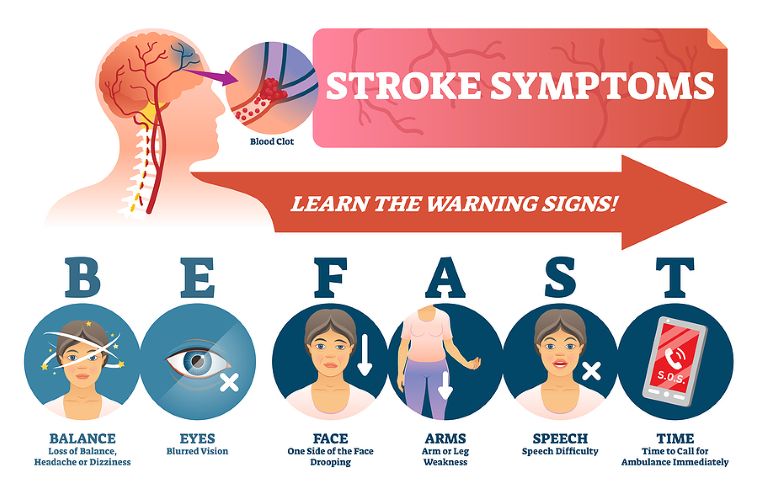
The American Stroke Association encourages the public to remember B.E. F.A.S.T.:
- B — Balance: Sudden loss of balance or coordination.
- E — Eyes: Sudden vision changes or difficulty seeing.
- F — Face: Facial drooping or an uneven smile.
- A — Arms: Weakness or numbness, especially on one side.
- S — Speech: Slurred speech or difficulty speaking or understanding others.
- T — Time: Call 911 immediately if a stroke is suspected.
Other sudden neurological symptoms, including confusion or a severe unexplained headache, may also signal an emergency. Patients should not wait for symptoms to become more obvious or attempt to determine on their own whether they are experiencing a stroke.
The American Stroke Association provides additional information about warning signs and the importance of emergency treatment.
For healthcare professionals, recognizing a stroke requires more than checking for the most familiar symptoms. It requires careful consideration of the patient’s history, neurological findings, and the possibility that a serious medical emergency may present in an unexpected way.
At Travieso McLeod, our Firm represents individuals and families affected by medical malpractice, catastrophic injuries, and wrongful death. Our attorneys work alongside in-house medical professionals to evaluate complex medical evidence, understand treatment decisions, and determine whether preventable failures in care caused harm.
A stroke can change a person’s life in minutes. Understanding whether a delayed diagnosis contributed to that outcome requires careful examination of both the medicine and the law. When warning signs are overlooked, the consequences can affect a patient and their family for a lifetime.
If you or a loved one have been effected by a delayed stroke diagnosis, give us a call at (904) 204-3013 or request a free consultation online.
Sources and Further Reading
- Saver JL. Time Is Brain—Quantified. Stroke (2006). — Research estimating neuronal loss during untreated large-vessel ischemic stroke.
- American Heart Association: 7 Things to Know About How Stroke Is Different for Women (2024). — Differences in stroke risk factors, symptoms, recovery, and prevention.
- Agency for Healthcare Research and Quality: Diagnostic Errors in the Emergency Department: A Systematic Review. — Research on diagnostic errors and patient harm in emergency departments.
- American Heart Association/American Stroke Association: 2026 Guidelines for the Early Management of Acute Ischemic Stroke. — Current treatment recommendations for acute ischemic stroke.
- Georgia Court of Appeals: Buckelew v. Womack (March 10, 2025). — Appellate decision addressing the delayed stroke diagnosis and medical malpractice verdict.
- Supreme Court of Georgia: Denied Petitions, June 10, 2025. — Denial of the petition in Womack v. Buckelew, Case No. S25C0923.
- Atlanta News First: He Was Having a Stroke for Hours, but ER Doctors Missed It (June 18, 2025). — Television investigation documenting Jonathan Buckelew’s injuries and his family’s experience.
- American Stroke Association: Stroke Symptoms and Warning Signs. — Public education about stroke recognition and emergency response.
This article is provided for general educational purposes and does not constitute medical or legal advice. If a stroke is suspected, call 911 immediately.